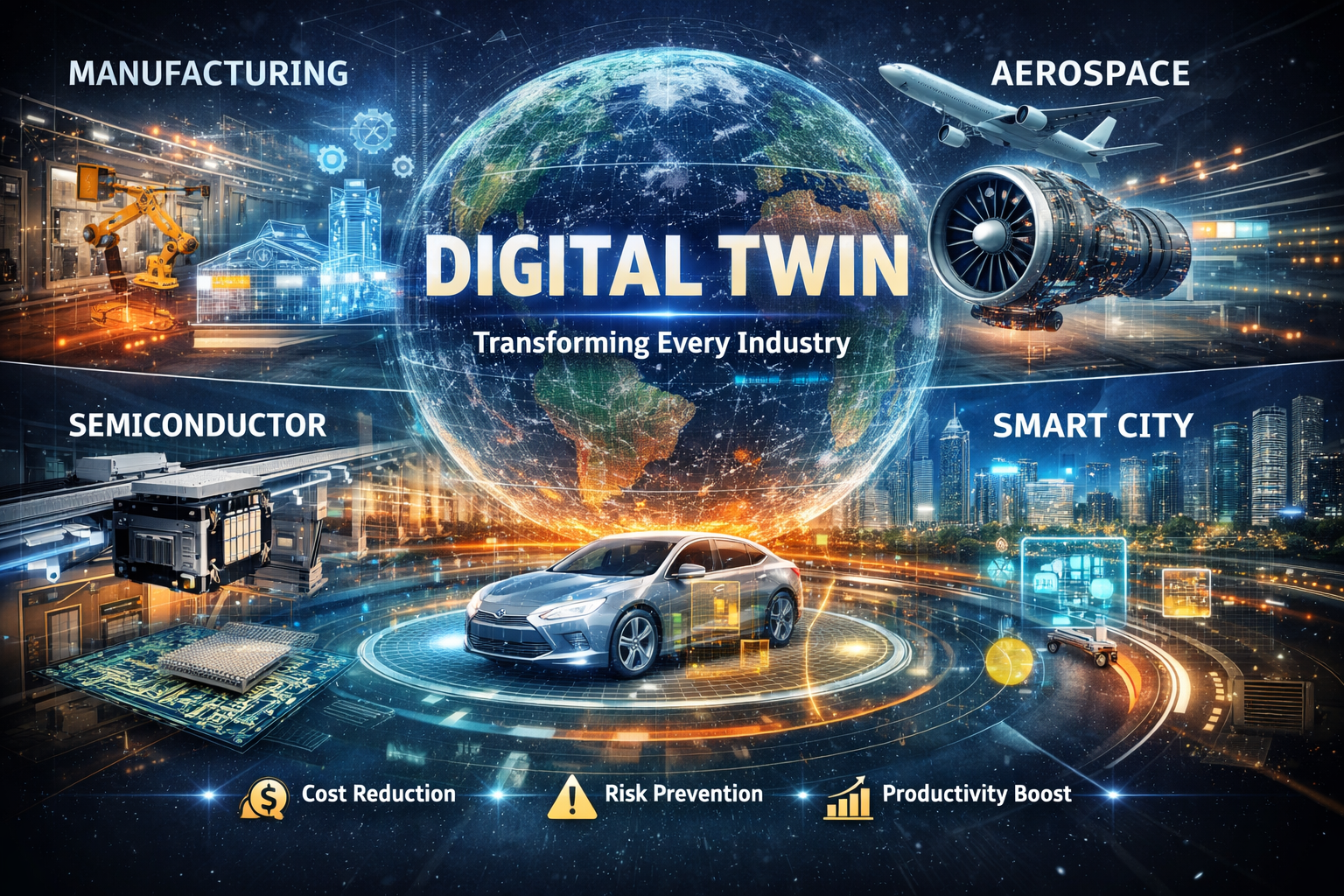
🚀 디지털 트윈, 실제로 어디에 쓰일까?
디지털 트윈은 개념만 보면 멋있다.
하지만 더 중요한 질문이 있다.
👉 “그래서 이 기술, 실제로 어디에 쓰이고 있을까?”
결론부터 말하면
👉 이미 거의 모든 산업에 적용되고 있다.
그리고 공통점은 하나다.
“비용을 줄이고, 실패를 미리 막는다”
🏭 1️⃣ 제조 산업 (가장 먼저 적용된 영역)
디지털 트윈이 가장 활발하게 쓰이는 곳은 제조업이다.
✔ 어떻게 쓰일까?
- 생산 라인 시뮬레이션
- 공정 최적화
- 설비 고장 예측
✔ 실제 사례
👉 Siemens
- 공장 전체를 디지털로 복제
- 생산 전에 가상에서 검증
- 공정 변경 시 리스크 최소화
👉 핵심
“공장을 먼저 가상에서 돌려보고, 현실에 적용한다”
✔ 왜 중요한가?
- 생산 중단 비용 ↓
- 품질 문제 사전 제거
- 설비 투자 효율 ↑
✈️ 2️⃣ 항공 / 우주 산업 (고장 허용이 없는 영역)
항공 산업은 “실패 비용이 가장 비싼 산업”이다.
그래서 디지털 트윈의 가치가 극대화된다.
✔ 어떻게 쓰일까?
- 엔진 상태 모니터링
- 비행 시뮬레이션
- 유지보수 예측
✔ 실제 사례
👉 GE
- 항공기 엔진 데이터를 실시간 분석
- 고장 가능성 사전 예측
- 유지보수 시점 최적화
👉 핵심
“고장이 나기 전에 이미 알고 대응한다”
✔ 왜 중요한가?
- 사고 리스크 감소
- 유지보수 비용 절감
- 가동률 극대화
🧠 3️⃣ 반도체 산업 (초정밀 + 초고비용 구조)
반도체는 작은 오류 하나가
👉 수억~수십억 손실로 이어지는 산업이다.
✔ 어떻게 쓰일까?
- 공정 시뮬레이션
- 장비 상태 예측
- 물류 최적화 (OHT)
✔ 적용 포인트
👉 특히 물류 자동화에서 강력
- OHT 충돌 방지
- 경로 최적화
- 병목 구간 제거
👉 핵심
“보이지 않는 공정까지 예측하고 제어한다”
✔ 왜 중요한가?
- 수율 향상
- 공정 안정성 확보
- 생산성 극대화
🚗 4️⃣ 자동차 / 모빌리티 (설계 혁신)
자동차 산업은 지금
👉 “디지털 트윈 기반 설계”로 빠르게 이동 중이다.
✔ 어떻게 쓰일까?
- 차량 성능 시뮬레이션
- 충돌 테스트 가상화
- 자율주행 데이터 검증
✔ 실제 사례
👉 Tesla
- 실제 차량 데이터를 기반으로
가상 환경에서 지속적으로 개선
👉 핵심
“출시 이후에도 계속 진화하는 설계”
✔ 왜 중요한가?
- 개발 기간 단축
- 테스트 비용 절감
- OTA 기반 성능 개선
🏙️ 5️⃣ 스마트 시티 / 인프라 (확장되는 영역)
디지털 트윈은 이제
👉 도시 전체로 확장되고 있다.
✔ 어떻게 쓰일까?
- 교통 흐름 분석
- 에너지 관리
- 도시 시뮬레이션
✔ 대표 사례
👉 Singapore
- 도시 전체를 디지털 트윈으로 구현
- 교통 / 환경 / 인프라 통합 관리
👉 핵심
“도시를 하나의 시스템으로 운영한다”
🔄 공통 구조 (핵심 인사이트)
모든 산업을 관통하는 구조는 같다.
👉 디지털 트윈이 하는 일
- 현실 데이터를 수집하고
- 가상에서 시뮬레이션하고
- 결과를 다시 현실에 반영한다
👉 결국
“의사결정을 미리 해보는 시스템”
🔥 핵심 요약
👉 디지털 트윈은 특정 산업 기술이 아니다
→ 모든 산업을 바꾸는 공통 플랫폼이다
적용 효과:
- 비용 절감
- 리스크 감소
- 생산성 향상
🚀 앞으로 어디까지 갈까?
앞으로는 이렇게 발전한다:
- 공장 전체 자동 운영
- AI 기반 자율 의사결정
- 산업 간 통합 (Factory + Logistics + Energy)
👉 결국
“현실을 운영하는 또 하나의 디지털 시스템”
🚀 Where Is Digital Twin Actually Used?
Digital Twin sounds impressive as a concept.
But a more important question remains:
👉 “Where is this technology actually being used in the real world?”
The answer is simple:
👉 It is already being applied across almost every major industry.
And they all share one common goal:
Reduce cost and prevent failure before it happens
🏭 1️⃣ Manufacturing (The Earliest Adopter)
Manufacturing is where digital twins are most actively used today.
✔ How is it used?
- Production line simulation
- Process optimization
- Predictive maintenance
✔ Real-world example
👉 Siemens
- Replicates entire factories digitally
- Validates production before execution
- Minimizes risks when changing processes
👉 Key Insight
“Run the factory in the virtual world first, then apply it to reality”
✔ Why does it matter?
- Reduced downtime costs
- Early detection of quality issues
- Improved capital efficiency
✈️ 2️⃣ Aerospace (Zero-Failure Industry)
Aerospace is one of the most expensive industries when it comes to failure.
That’s why digital twins create maximum value here.
✔ How is it used?
- Engine health monitoring
- Flight simulation
- Predictive maintenance
✔ Real-world example
👉 GE
- Analyzes aircraft engine data in real time
- Predicts failures before they occur
- Optimizes maintenance schedules
👉 Key Insight
“Problems are solved before they even happen”
✔ Why does it matter?
- Reduced accident risk
- Lower maintenance costs
- Increased operational availability
🧠 3️⃣ Semiconductor Industry (High Precision, High Cost)
In semiconductors, even a small error can lead to massive losses.
✔ How is it used?
- Process simulation
- Equipment condition monitoring
- Logistics optimization (OHT systems)
✔ Key application
👉 Especially powerful in automated material handling:
- OHT collision avoidance
- Path optimization
- Bottleneck reduction
👉 Key Insight
“Even invisible processes can be predicted and controlled”
✔ Why does it matter?
- Higher yield
- Stable processes
- Maximum productivity
🚗 4️⃣ Automotive & Mobility (Design Transformation)
The automotive industry is rapidly shifting toward digital twin-based design.
✔ How is it used?
- Vehicle performance simulation
- Virtual crash testing
- Autonomous driving validation
✔ Real-world example
👉 Tesla
- Continuously improves vehicles using real-world data
- Applies updates through virtual validation
👉 Key Insight
“Design doesn’t stop after production—it keeps evolving”
✔ Why does it matter?
- Shorter development cycles
- Reduced testing costs
- Continuous performance improvement (OTA updates)
🏙️ 5️⃣ Smart Cities & Infrastructure (Next Expansion)
Digital twins are now expanding beyond factories—into entire cities.
✔ How is it used?
- Traffic flow optimization
- Energy management
- Urban system simulation
✔ Real-world example
👉 Singapore
- Built a digital twin of the entire city
- Integrates transportation, environment, and infrastructure
👉 Key Insight
“Cities are becoming fully integrated systems”
🔄 Common Structure (Core Insight)
Across all industries, the structure is the same:
👉 What Digital Twins do:
- Collect real-world data
- Simulate in a virtual environment
- Apply results back to reality
👉 In essence:
“A system that allows decision-making before action”
🔥 Key Takeaways
👉 Digital Twin is not just a single technology
→ It is a platform that transforms entire industries
✔ Core benefits:
- Cost reduction
- Risk minimization
- Productivity improvement
🚀 What’s Next?
The future of digital twins is heading toward:
- Fully autonomous factories
- AI-driven decision-making
- Cross-industry integration (Factory + Logistics + Energy)
👉 Ultimately:
“A parallel digital system that operates the real world”
'T — Tech & Trends' 카테고리의 다른 글
| TurboQuant vs 기존 AI 압축 기술 (0) | 2026.04.01 |
|---|---|
| [digital twin-5] 디지털 트윈 시장 어디까지 성장할까? 핵심 기업과 투자 포인트 (0) | 2026.03.23 |
| [digital twin-3] 디지털 트윈 시스템 구조 완전 해부: 센서부터 시뮬레이션까지 (0) | 2026.03.22 |
| [digital twin-2] 디지털 트윈은 어떻게 구현할까? 기계공학 필수 이론 총정리 (0) | 2026.03.21 |
| [digital twin-1] 디지털 트윈이 뭐길래? 기계공학이 바꾸는 ‘가상 설계’의 시대 (0) | 2026.03.21 |


댓글